


Türen auf mit der Maus: Small Wonders and Big Curiosity at Fraunhofer IME


Gently holding a caterpillar, discovering new perspectives through a VR headset, and asking researchers questions: there was plenty to experience at “Türen auf mit der Maus” (“Opening Doors with the Mouse”) at Fraunhofer IME in Gießen. Under the theme “Small Wonders,” children and their families went behind the scenes of our research on October 3, 2026. Five interactive stations invited them to try experiments themselves and explore the world of insects, microorganisms, and natural products. Read more about the event at Fraunhofer IME.

We joined in with our caterpillar research model, Manduca. This is the tobacco hawkmoth, scientifically known as Manduca sexta. We use its caterpillars as model organisms to study biological processes and the effects of different substances on the body. During the event, children could meet these animals and discover the fascinating research questions a caterpillar can help us explore.

Our microCT scans offered a glimpse inside the insects. Micro-computed tomography uses X-rays to produce detailed, three-dimensional images of structures within the body. For the event, we made our research data accessible in two ways: through 3D-printed models that children could touch and explore, and through three-dimensional visualizations in virtual reality. This allowed them to discover structures that remain hidden when simply looking at a caterpillar.

At our second station, visitors could meet the living insects. Stefan Schmidt presented the complete Manduca life cycle, from tiny eggs through caterpillars and pupae to adult moths. Seeing the different developmental stages side by side brought this transformation to life. Children who wanted to could also gently hold a caterpillar and observe it up close.

Our research also serves a purpose beyond our fascination with these animals: we want to help counter insect decline. Using our caterpillar model and advanced imaging techniques, we investigate how active substances affect insects and what changes they cause inside their bodies. This knowledge can help identify pesticide risks and support the development of safer crop protection products, particularly for insects that are not intended targets of treatment. Through this work, we aim to help reconcile crop protection with insect conservation. Learn more about our caterpillar model and imaging research.
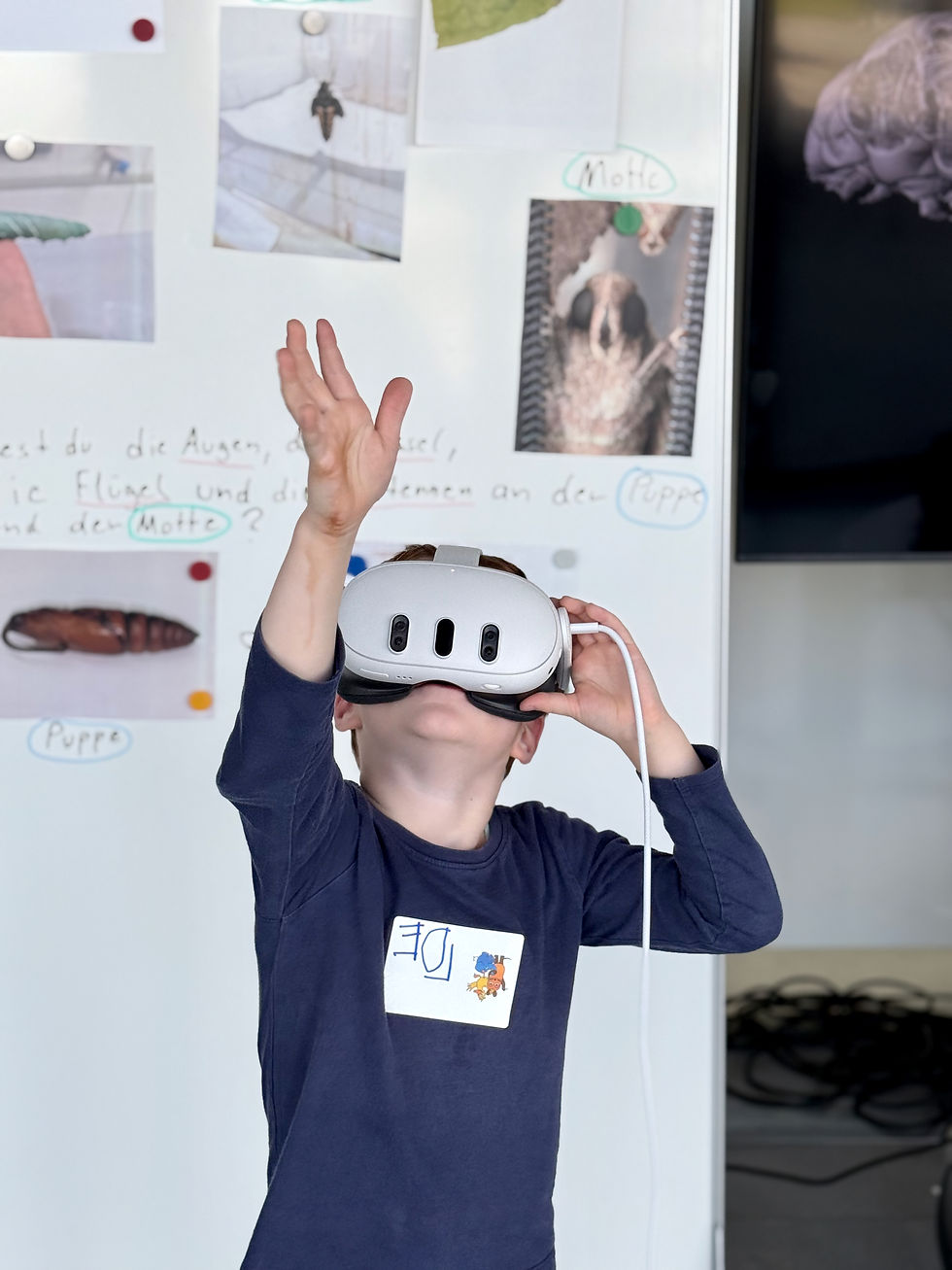
A very special thank you goes to Jessica Steibart, who enthusiastically ran the VR station and guided the children through their virtual discoveries. My heartfelt thanks also go to Stefan Schmidt for his work at the Manduca station and for making the life cycle of our caterpillars so engaging and accessible!

What stays with me most is the children’s curiosity, their many questions, and their enthusiasm for trying things themselves. It was a pleasure to share our research with them and discover things together. These encounters are what make “Türen auf mit der Maus” such a special day.

Thank you to the organizing team, everyone who contributed, and all our visitors, young and old, for bringing the day to life!


Comments